Monday, May 11, 2026
Resellers: Are They Right For You?

James Russell
Music Software Marketing Consultant
James is a business and marketing consultant for music software companies. He's always on the lookout for new startups with the next big thing.
https://www.eggaudio.com/
In exchange for a cut of the sale price, you can offer your plugin for sale through a third-party. You’ll recognise platforms from Plugin Boutique, Thomann, Sweetwater, Splice, to JRR Shop, Stacks, Plugin Fox and many more; and the existence of something like Xchange means that anyone with an audience can, technically, set up a reseller of their own without too much trouble.
In the hardware world, it’s almost a requirement to sell through a distributor, but what’s the appeal of a reseller to a software developer? Especially when you have your own website, your own awesome, plugin-specialized e-commerce platform, and your own way to sell stuff all by yourself? What could you possibly need from a third-party selling your stuff as well?
Put simply: it’s their audience. Because each reseller has a history of selling plugins made by dozens or hundreds of developers, they have accumulated huge mailing lists, large media reach, and – usually – some trust and recognition.
Reseller Trade-Offs and Tension
Especially for a developer who’s starting out and has no established customer base at all, selling through a partner who has a ready-made set of potential buyers sounds like the perfect opportunity. But naturally, your partnerships don’t come for free.
Each reseller takes a certain amount of each sale, as the price of doing business.
This can provide tension between a developer and a reseller. The developer thinks about the relationship into the future: “What are you doing to earn your cut?” The reseller thinks about the relationship into the past: “We have worked hard to build a platform with an audience that you can access”. That’s a primary source of tension in the relationship.

See the Reseller as a Commission-Based Marketing Partner
In a way, for a developer, the reseller’s cut of each sale is an alternative to paying for marketing services. Resellers tend to get better results than in-house marketing when the company is new, but by the time the developer’s brand grows, its own efforts can have a far larger effect than reseller sales.
Working with a reseller could be seen as a marketing cost – just like giving away a free plugin to gain an audience comes at a cost; just like spending on PR or video production comes at a cost.
Making a Reseller’s Audience Your Own
As a developer, you should want to build your own audience, and having access to a reseller’s audience comes with one opportunity to do so.
It’s common for developers to give tokens or vouchers to a reseller to sell, meaning that anyone who buys through a reseller has to come to your own website to redeem the license, thereby giving you control over the relationship, and (after any opt-in), the ability to email this customer, making them part of your audience. With Moonbase, you can do this using Vouchers.
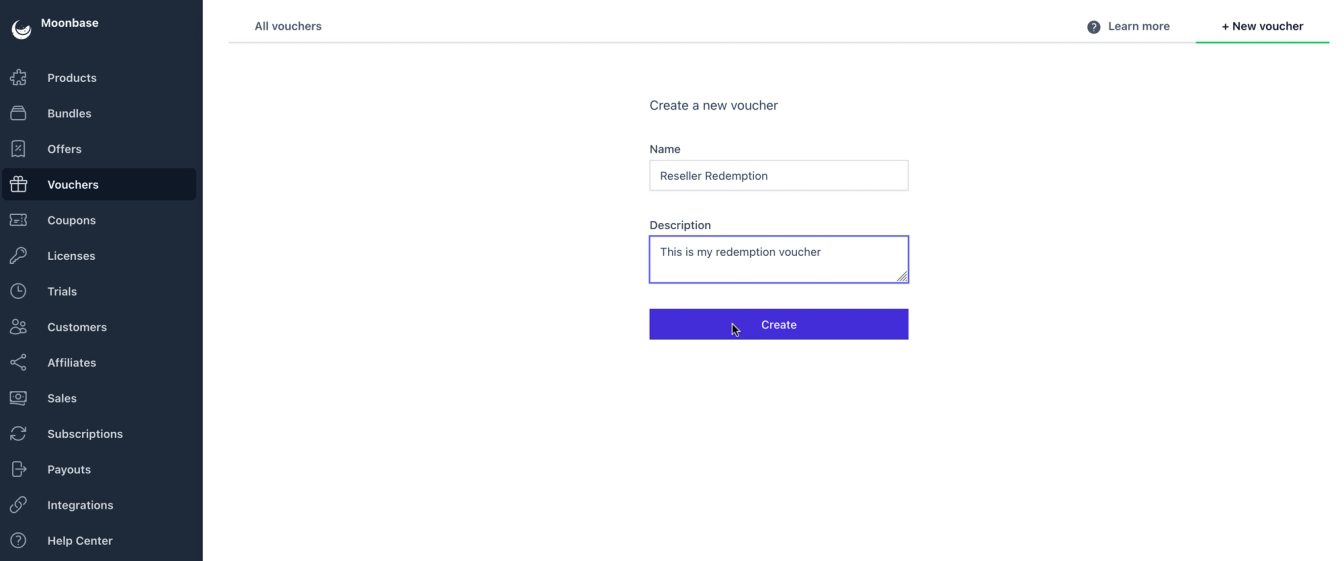
From the reseller’s perspective, this was never the intention, but the practice is so widespread that it would be hard to stand against.
The Reseller Landscape
In 2026’s market, there are multiple resellers of varying sizes. Each takes a cut of each sale, and the exact amount varies between resellers. Sales often overlap between resellers and the developers themselves. Pricing stays quite consistent and there are few exclusive sales. The biggest brands tend to appear on many or all reseller platforms – it’s rare to find a plugin brand that distributes through a single reseller.
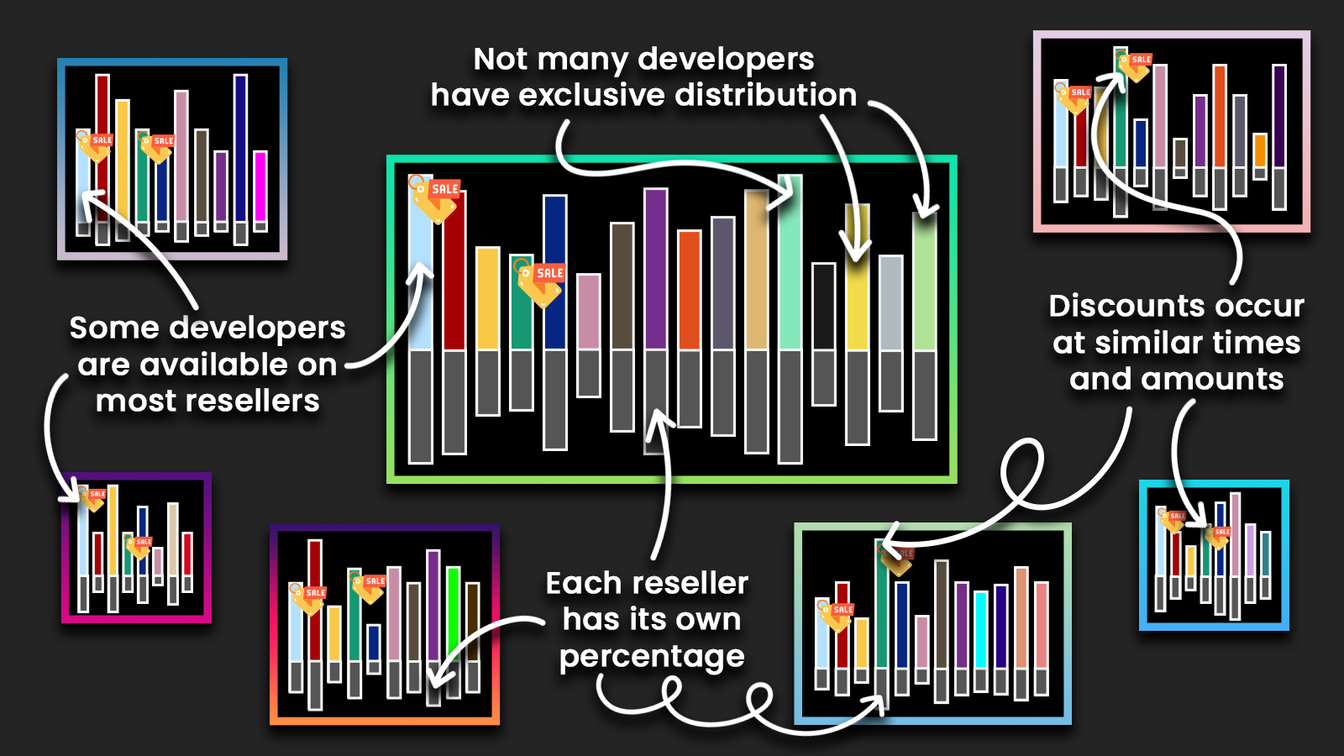
You may think that the resellers market would trend towards the lowest commission rate, that whoever takes the smallest rate and makes it work will eventually win. But instead, the market seems to trend towards the highest commission rate, as resellers who charge this can afford a larger marketing spend.
As a developer, this should update your assumptions: again, a reseller’s commission should be seen as a charge for marketing, not simply a slice taken by someone else. Choosing a reseller because of their low price of entry might mean you’re choosing one who doesn’t have much effort, time or money to spend on promoting you.
Then again, there is a cumulative advantage to success. In this case, the brands that do best on a platform will tend to be pushed more strongly by that platform. If a new product has a slow start, it can feel like it’s falling right back to the bottom shelf, where no one will find it. This means different developers have different experiences and different recommendations when it comes to resellers.
What does the Current Setup Feel Like for Developers?
Successful: If your plugins play well on a particular platform, you’ll see an increase in sales, a continuous (probably modest) flow of new customers, and a larger response the next time you launch a new piece of software. The reseller is happy to push your products above others, because they get a better response.
Unsuccessful: If your plugins don’t play well on one platform, they’ll languish on its back shelves, appearing only in occasional search results. It won’t feel like the reseller is doing much for you, but it’s not like you’re losing out, so you don’t withdraw from the store.
How Customers See Resellers
The original idea of resellers may have been to have a single login where you can download and administer all the music software you own, but this isn’t the way things have turned out. With most plugin developers redirecting a customer to their website to redeem your purchase, and to become one of their customers in the process, resellers are less of a central hub, and more of a retail environment.
A reseller isn’t necessarily a platform that a customer would visit to find a specific plugin they already know they want. They may use a reseller to compare multiple plugins of one type (although there are search engines for that, too. Many customers will find themselves at a reseller’s website after using a tool like the Plugin Reseller Price Check, PluginPlug.io or AudioBazooka.com to see what the best deal on a plugin is.

The final type of reseller customer is maybe the most important to understand: it’s the person who has turned up on the homepage (or via their email list) specifically looking for a deal. A compressor for 90% off or an $8 EQ. One of the chief motivations for visiting a reseller is deal-hunting.
The upshot of this is that many developers find that their reseller sales are heavily biased towards times when the plugin is on sale or at a heavy discount. This is very dependent on the type of plugin, though.
What to Look For in a Reseller
Here are some considerations you should make when choosing which resellers to go for, or whether to engage one at all.
Who Sets the Price? Who Sets the Package?
Find out how flexible the reseller is on their pricing. Do you get to set a minimum price? If they run a discount, does it come out of their margin or yours? As well as pricing, can they bundle your software with others, or give it away for free as an incentive?
Specialism
It may not appear so from the outside, as they don’t always want you to know, but resellers can have a certain type of audience. One may lean towards analogue-style mixing plugin buyers, while another may be more creative effects, and another synths and instruments. These differences are subtle, but could mean the difference between placing your software in front of the right eyes vs the wrong ones.
Marketing Power
Does the reseller support releases with videos, social media or other content? Sign up for their mailing list and see what they send out to others. Identify what the content is made for: Every new release? Old releases? Themed months? Or certain companies only, implying additional deals that aren’t in a basic contract.
Customer Data
Do customers come to your website to redeem purchases? Are you able to add your own opt-in email subscription when a purchase is made?
Exclusive Discounts
Can a particular reseller reduce the price of your software when they want to? Can they reduce the price of your software to be lower than your own? Do they do this frequently with their current vendors? This doesn’t have to be a bad thing, and in my opinion it makes for a healthier balance of give-and-take between a reseller and their developers, but only if the extra discount is coming out of the reseller’s margin.
Trust
With the growing number of plugin brands, scam resellers and sites selling pirated licenses, a well-known reseller can help to provide confidence in a purchase, offering potentially more guarantees than the developer themselves.
Searchability
With a proper system of tagging and a higher density of information, a reseller should be able to help you find something you’re looking for out of its larger pool of options. For example, “I’m looking for a synth with an unlimited number of oscillators”, or “A delay where I can insert effects into the feedback loop”. Each search would give you multiple options from different developers, all available from the one source. This is the most likely way that some more highly-specific but less headline-grabbing plugins can get some attention.
Reviews
As a relatively independent entity, resellers themselves should step back from judgment about which plugins are better than others, but their platforms do provide a great place for customers to share experiences in a way you wouldn’t find on a single developer’s website. This gives customers a chance to read honest reviews from users, without the intervention of the developer, as you’d see in an online retail environment.
Discovery
A developer may engage a reseller in place of their own marketing budget, but often, a reseller’s contribution to marketing can be smaller than the developer expects.
Summing Up
Resellers are a valid way to build a brand and an audience; they may or may not fit into your wider strategy. You should consider a reseller as a part of your marketing strategy, and consider their cut to be similar to an advertising expense or general marketing charges. Like most things in marketing, you should be thinking of the partnership in terms of the audience it will give you, and whether that audience is right for you.
When picking a reseller, or multiple, you should consider what the deal allows the reseller to do, including setting the price, running exclusive discounts, and so on. Just as importantly, you should consider whether the reseller’s audience is aligned with your own, and whether your particular plugin would play well there.
If a reseller’s fees are seen as a marketing cost like any other, then working with a reseller is a choice that should fit within a coherent strategy. You may have more important strengths and priorities elsewhere in your marketing mix.
Upgrade your business
Ready to get started?
Set up your storefront, licensing, and payments in one place. No duct tape required.