Friday, December 19, 2025
Introductory Sales on Plugins – Why Do We Do That?

James Russell
Music Software Marketing Consultant
James is a business and marketing consultant for music software companies. He's always on the lookout for new startups with the next big thing.
https://www.eggaudio.com/We have a strange habit in the world of plugins and music software. Whenever a plugin is released, you can be pretty sure that it will come out at a discount.
In a quick survey of three months of product releases on KVR Audio, me and my team found that two thirds of plugins released were discounted at launch, and one third stayed steadfast at their MSRP from day one. An informal survey, but one that probably feels about right to most industry watchers out there.
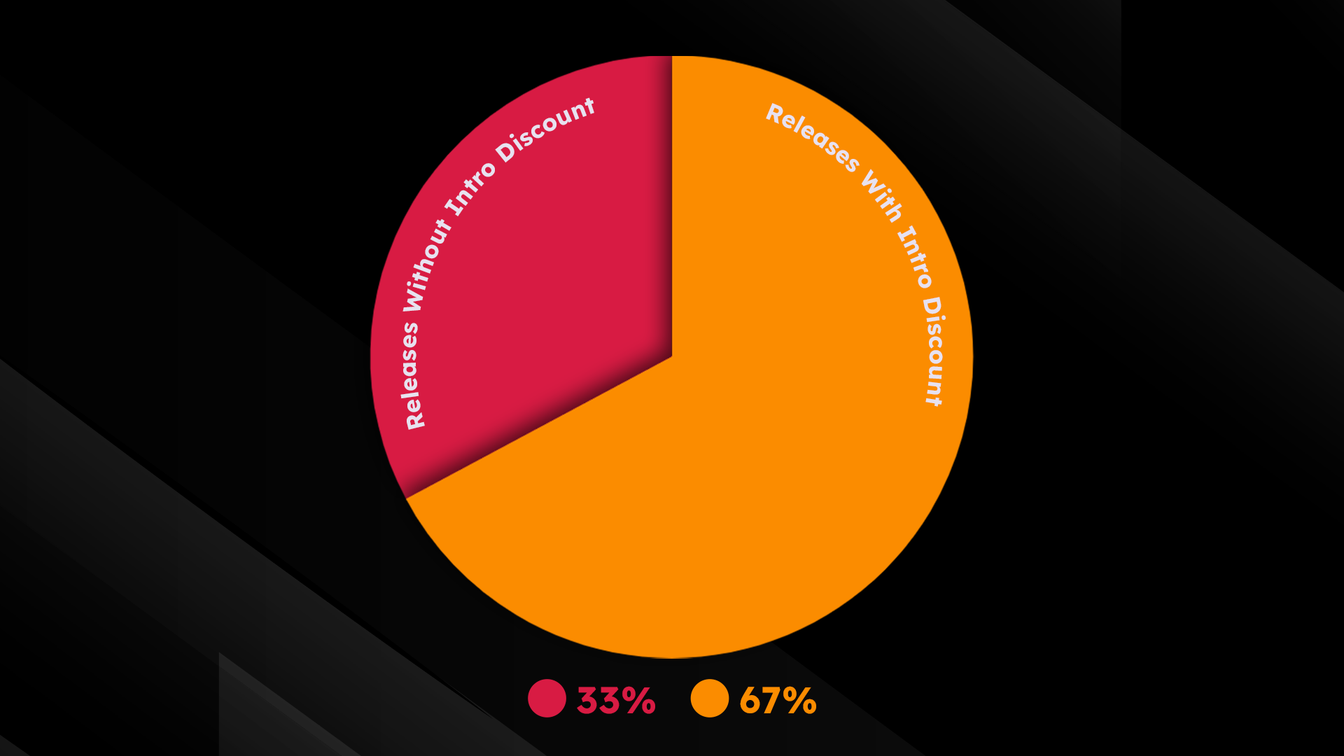
I’ve done it myself many times. When planning launches and discussing prices, the introductory discount has always come up, and I’ve always built it into the promotional strategy. It’s just what we do in this industry, isn’t it? But more recently, I’ve been questioning whether the introductory sale is really necessary, or if it’s just a thing we’re all copying from each other.
There’s a broader question about why we have sales in general, but for this article, we’re sticking to the first month or two only.
Is This… Normal?
We might be used to our practice of Discounting From Day One, but once you put your mind into other industries, it can be seen as a weird one.
Which Industries Don’t Have Introductory Sales?
There’s a well-known adage that when you buy a new car, it loses much of its value as soon as you drive it away. Likewise, you wouldn’t find an introductory discount on the latest iPhone. Books come out at full price, as do clothes. I’m the first and only person to live in my house, and I’m pretty sure I didn’t save myself any money by doing it that way.
And if you want perhaps the greatest example of an industry that doesn’t do introductory sales, how about our brothers and sisters in the land of the physical: musical instruments. You wouldn’t see a newly introduced piano, guitar or piccolo flute selling for a discount.
Where Else can we Find Intro Sales?
On the other hand, we can see some similar practices in some similar industries: online courses and ebooks will often offer an introductory discount. Indie games on Steam can launch – often after an early access sale – at a discounted price.
Similar but worth mentioning: software subscriptions will often offer one, two or three months free, while Kickstarter or Indiegogo campaigns represent buying in early for a discount compared to the envisaged regular price.
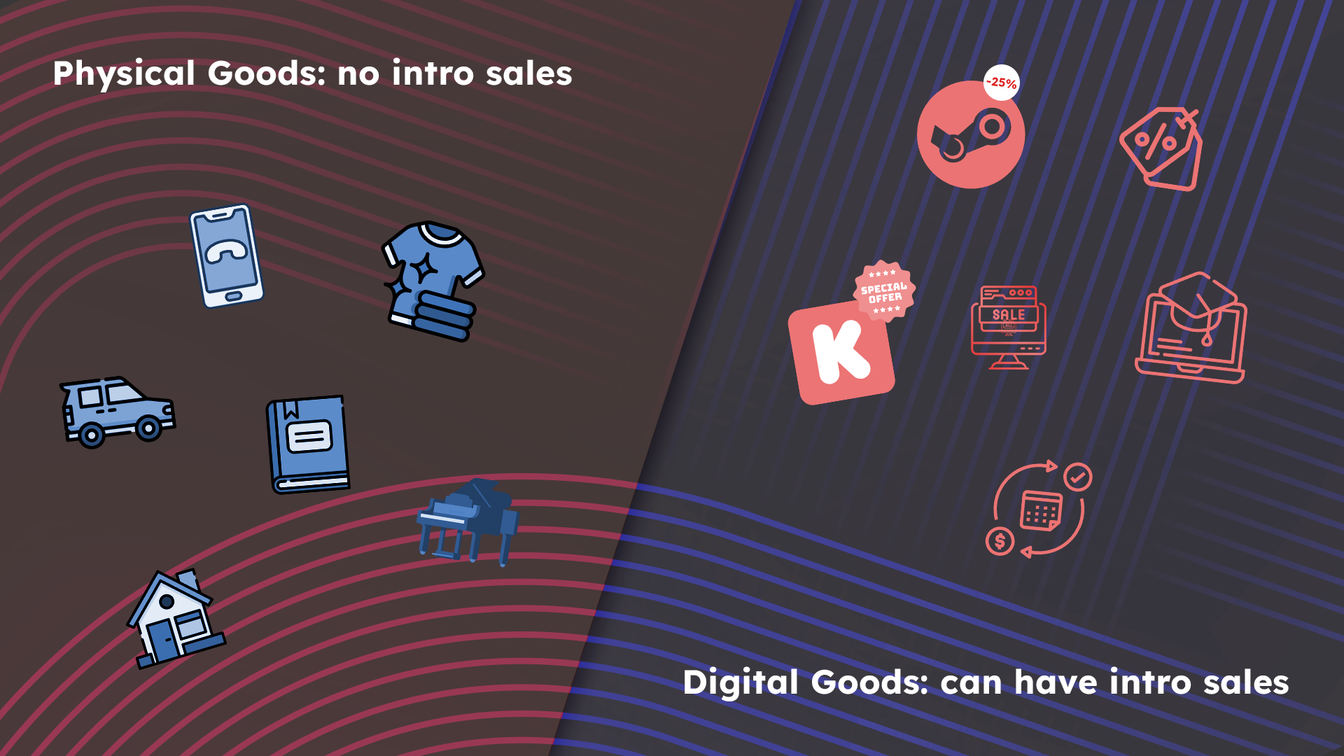
You’ll notice a pattern quite easily: it’s the digital products that have all come to be marked by these introductory sales practices, whereas hardware and physical goods start off at their full prices.
Each of those digital industries – whether independently or from following each other – have settled into a model of introductory sales, at least for a portion of the releases within them.
Let’s think about why…
Why Intro Sales (seem to) Happen
Digital goods have a cost to their development, but once this cost is ‘paid’, each replication has no or very low cost to the seller. For music hardware and other physical goods, a manufacturing and distribution cost is inherent in every item sold.
Importantly, digital distribution can be dependent on the platform it takes place on. A game developer selling on Steam will probably be better served by the discovery algorithm if their game sells well straight after its launch, and applying a discount will help this cause. This is less instrumental for plugin developers, but could pay a part.
Crucially, early adoption is vital for a product’s success, especially if it’s the seller’s first one. More early sales also lead to more reviews, social proof and word of mouth. Taken to its extreme end, we can see tactics like “Free for a limited time”, which builds a user base and reputation in the first days of a product’s release, in exchange for any income.
Software tools can’t be ‘used’ or ‘secondhand’, so the value doesn’t degrade in a physical way, although they can certainly be perceived as less valuable the older they get.
Intro Sale vs Early Access
In some industries, any intro sale, where it exists, can be functionally identical to Early Access pricing. Both discounts offer a customer something for cheaper, and the reasoning is only very slightly different: in one, you’re getting a discount because the thing is unfinished; in the other, you’re getting a discount because the thing is new.
The reasons for buying remain the same in both intro sale and early access periods. But games are much better matched to early access sales, while plugins running early access sales can run into a lot of problems (more on this in a later article, probably).
Intro Sale vs Pre-Orders
Pre-ordering, on the other hand, isn’t a bad idea for plugin sales. Pre-order discounts offer likely customers the chance to buy for cheaper before the product is released. The price? They can’t use the product until it actually gets released. This sort of early buy-in model rewards loyalty, but the criticism is that any customer who is that willing to buy would have likely paid full price on launch.
Combining Introductory Sales with Loyalty Discounts
One thing that’s strikingly easy to do with Moonbase is to set up custom discounts for a plugin based on other conditions a customer fulfills – for example, owning a certain number of your other plugins.
When Yum Audio launched their Lofi Drifter plugin, Moonbase made it possible for them to offer deeper discounts for owners of other plugins in their Lofi series.
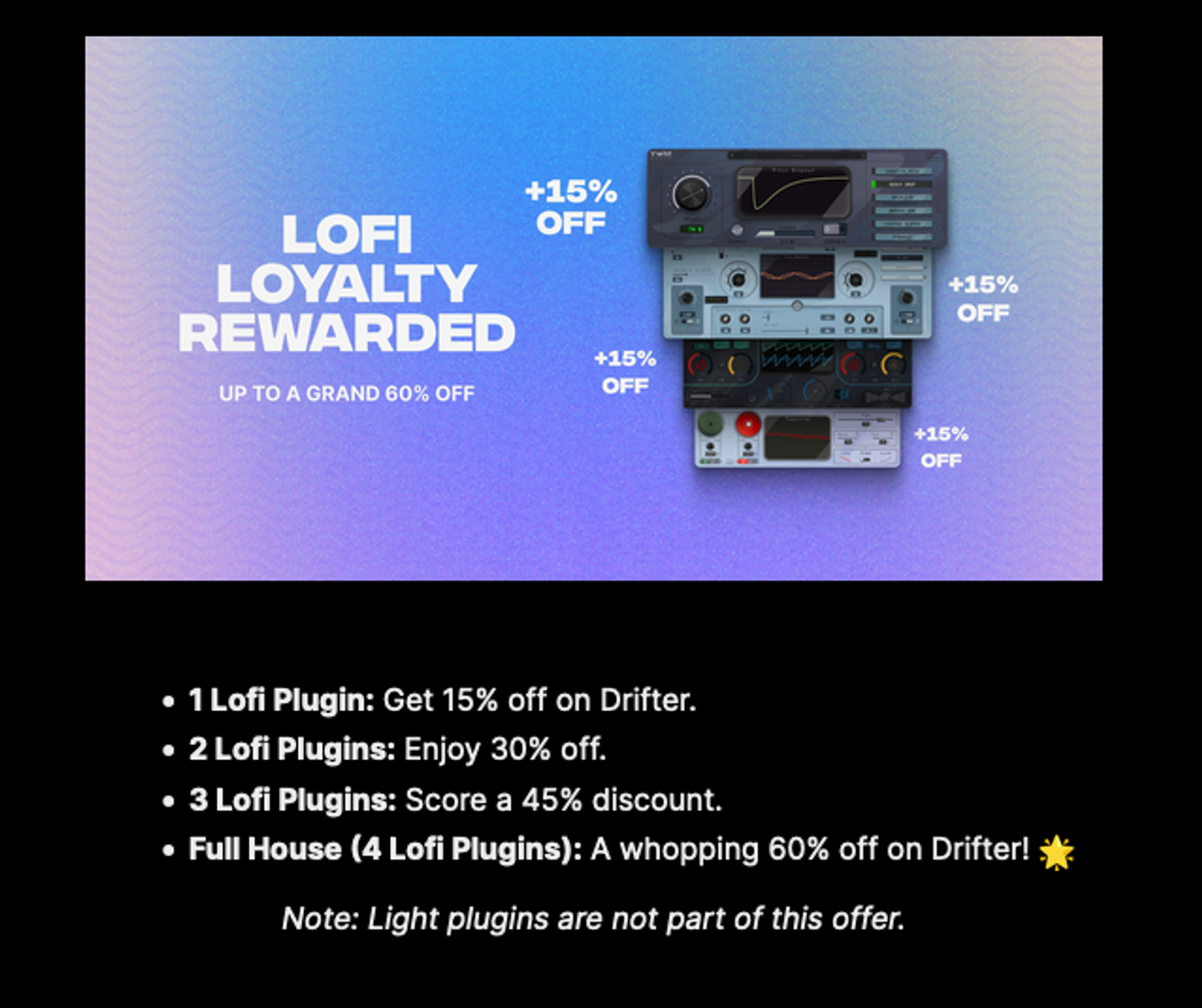
This works well for developers who want to incentivize more purchases from existing customers, and to build a loyal fanbase of people who have been rewarded for their support and may be more likely to spread the word.
On the other hand, your existing customers are the most likely group of people to buy your next plugin anyway, and reducing the price encourages people to expect further price reductions, forcing your hand to do it more and more often. Your choice may be different from another developer.
Why Intro Sales Might be a Bad Idea
Digital products seem to have their own set of behaviours and conditions. When viewed through the lens of traditional factors – like economic and marketing principles – introductory sales seem like a silly thing to do: when a product is new, demand for it should be at its peak, and early adopters tend to pay a premium for their pioneering nature.
Like any discount, an introductory sale will also have a devaluing impact on a product. It will change the way people perceive its worth.
Intro Sales as Only Sales
Many plugin developers find that the majority of their orders happen while their products are on discount, with the periods of regular pricing being much drier.
In this light, new releases being placed on an introductory discount seems like a no-brainer. If people don’t buy your plugins unless they’re on discount, then why would you release a plugin in any other state?
The Pros and Cons of Introductory Sales
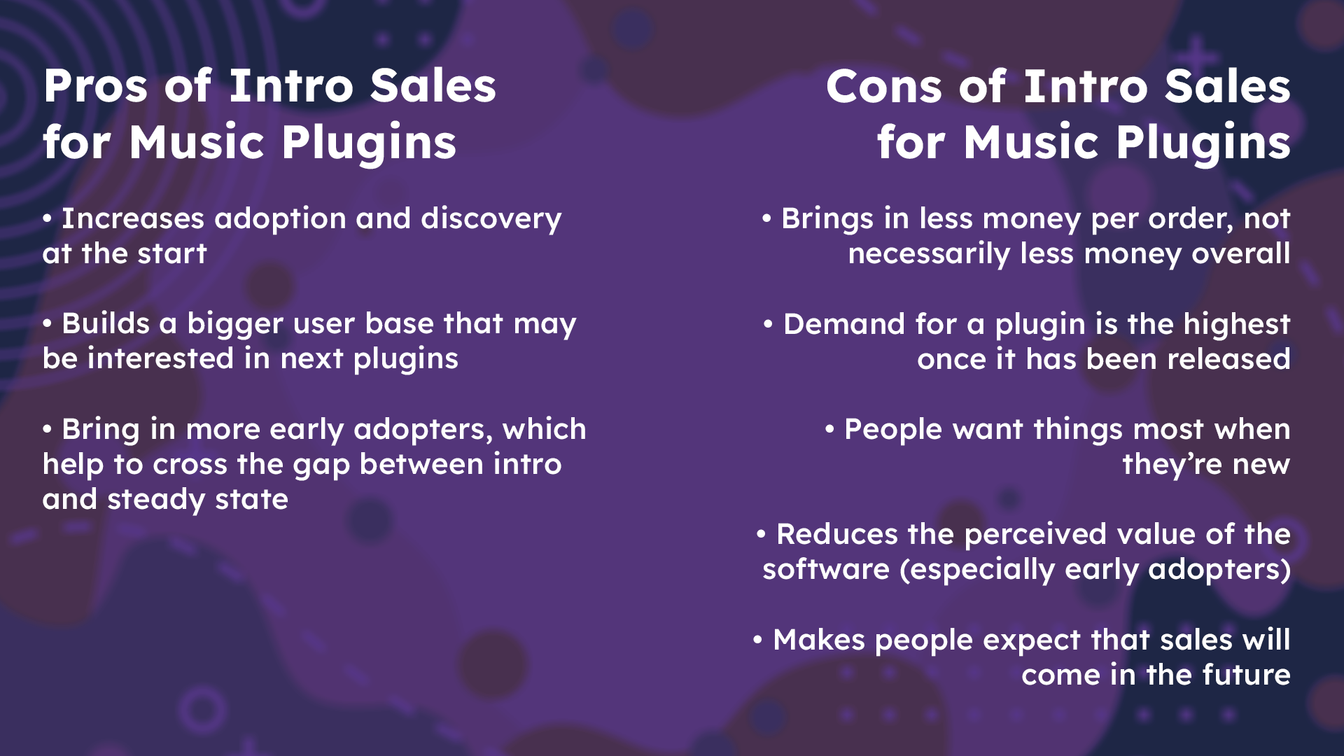
So, to discount or not to discount? Like anything else, it should be up to your priorities and your unique situation. Here’s a quick summary of the reasons to do one or do the other.
Who’s Pioneering the No Intro Discount Strategy?
Back to our quick survey of KVR releases, one thing became quickly apparent: the companies who launched their software without introductory discounts tended to be bigger players in the industry.
iZotope have been increasingly launching products without intro discounts recently, although they have stuck to tradition for certain launches. Equinox, for example, had an intro discount of 40%, while the more professional-focused, industry-standard, Ozone 12 launched at full price. Meanwhile, Arturia have been out of the intro discount game for a long time now, preferring to give tailored discounts to existing customers. Spectasonics’ recent release of Omnisphere 3 remains steadfastly $499 at the time of writing [yowzer!].
One interesting case is Eventide. Their history has one of the early examples of a plugin being “free for a limited time”, in 2014’s launch of UltraChannel. But more recently, the company seem to have landed on the opposite end of the spectrum, with their Temperance Pro reverb having a fixed MSRP on launch. It’s not all a change in direction, though, as here the idea is to to use the free-for-a-limited-time Temperance Lite, combined with its upgrade price, to offer what is, effectively, an intro price anyway.
Any more?
If you have a unique perspective, experience or information on the intro price debate, you can contact me through the form on my music software marketing agency website, or wherever else you think you can find me. I dare you.
Upgrade your business
Ready to get started?
Set up your storefront, licensing, and payments in one place. No duct tape required.