Tuesday, February 10, 2026
The Mistake Almost Every Audio Software Developer Makes

Hampus Åström
Moonbase Founder
Hampus is financial founder of Moonbase, making sure we are working safely as a merchant of record all around the world.
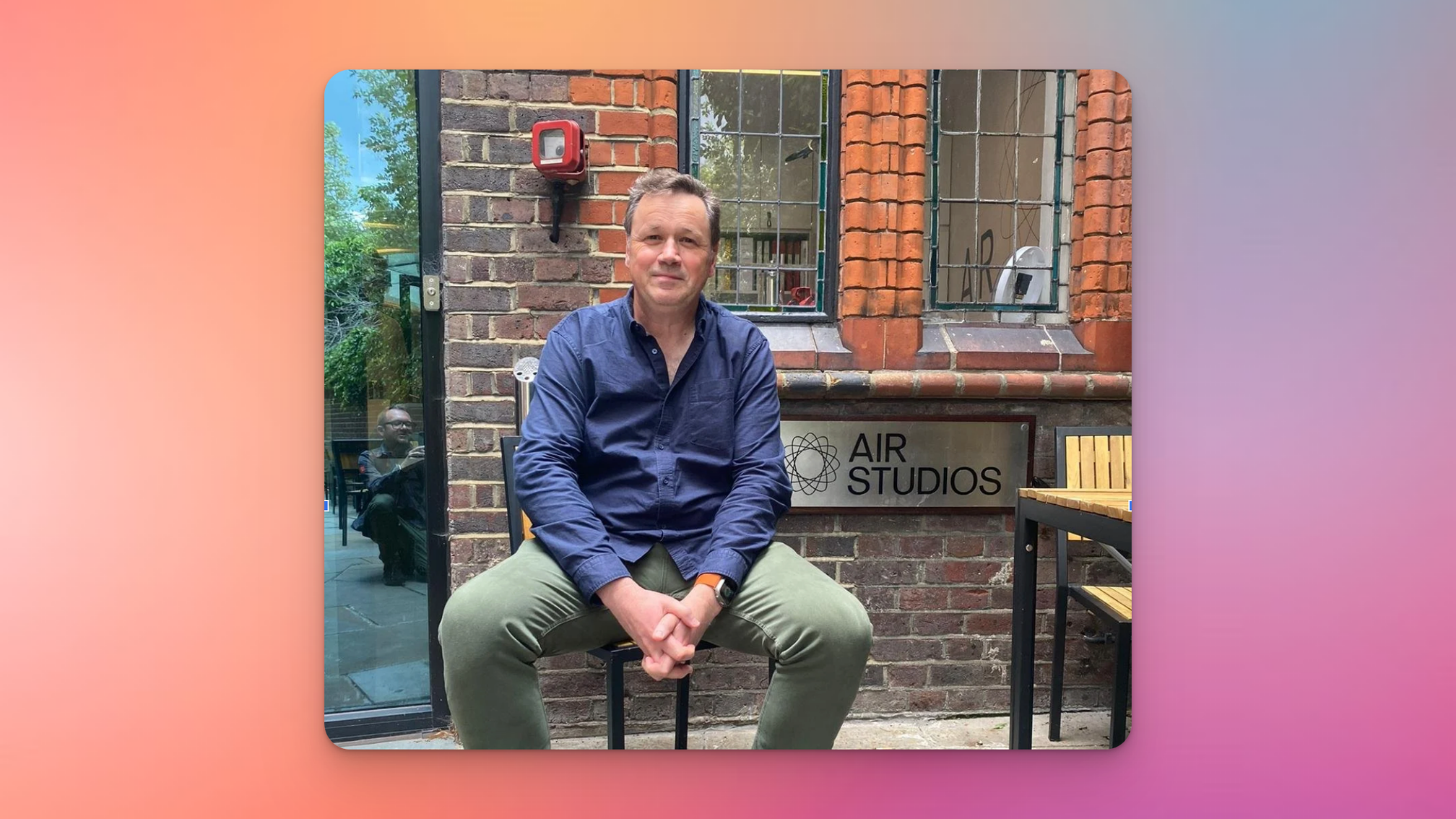
With hundreds of successful product launches in the audio technology sector under his belt, and decades of experience working inside the professional music and post-production world, Russ Hughes is worth listening to when it comes to getting products to market. He sat down with Moonbase to talk about the mistakes almost every audio software developer makes.
As the founder of Sociatech, Hughes has worked with everyone from solo plugin developers to some of the most established names in professional audio. It runs like a who’s who of the industry, yet he prefers to stay under the radar, usually insisting that the focus remains on the brand and the product rather than the people behind the work.
“It’s the golden rule of PR,” Hughes says. “We’re not the story.”
His role is rarely about adding features or refining code. Instead, it is about helping teams understand what they have actually built, who it is for, and whether anyone outside the development room will recognise its value.
“I see the same pattern again and again,” Hughes says. “Incredibly talented engineers spend years building something, then only at the very end ask how to sell it. By that point, most of the important decisions are already locked in. I’ve lost count of how often I’ve had to tell people it’s not ready, or that the idea itself needs more work.”
That observation is not theoretical. In the past year alone, Hughes has been involved in more than twenty product launches. Over fifteen years, he has seen the same mistakes repeated across companies of every size.
“There are two questions every developer should answer before they write a single line of code,” he says. “And most people don’t.”
From community to consultancy
Hughes’ route into this role was not planned. In 2008, he was active on user forums around Pro Tools at a time when Digidesign had bundled AIR virtual instruments into the platform but offered little guidance on how to get the best from them.
“Someone said in a forum, somebody should really do something about this,” he recalls. “So I did.”
He began creating tutorials, releasing sample packs, and publishing blog posts under the name AIR Users Blog. Within a year, the site had reached a million visits, at a time when YouTube was still emerging and social media platforms were largely undeveloped.
Brands soon began asking how he had achieved that growth, and whether he could do the same for them. The question kept coming until Hughes made a deliberate split. Editorial control went to a growing team that would later become Production Expert, while he launched Sociatech in 2010 as a consultancy focused entirely on music and audio technology.
“What made us different,” he says, “is that we actually understood this industry. Most agencies are generalists. We were already working with the tools, the workflows, and the people using them every day.”
Turning products into stories
One of Sociatech’s earliest projects was working with iZotope at a time when RX was respected but far from ubiquitous.
“They told me museums and archives were using it, but they wanted everyday engineers to care,” Hughes says. “So I said, stop treating RX as a product name. Make it a verb.”
The resulting “Let’s RX It” campaign focused on broken, real-world audio restored using RX, reframing the software as an action rather than an object.
“People remember stories and language,” Hughes says. “They forget specs.”
Years later, engineers still say “just RX it” without thinking twice. For Hughes, hearing his phrase used casually in studios around the world captures a fundamental truth about how products succeed.
“Specs matter, but they don’t stick,” he says. “Stories do.”
The two questions that matter
At the centre of Hughes’ thinking are two deceptively simple questions.
Why did you make it? Who did you make it for?
“These questions usually come up far too late,” he says. “Someone spends two years and their life savings building something, then calls me and says, ‘Now sell it.’ At that point, it’s already too late.”
The first question is about intent rather than marketing polish.
“There are really only two reasons you make something,” Hughes says. “Because nobody has, or because you think you can do it better. Both are fine. But you have to be honest about which one it is.”
The second question about who it’s for is where most products lose their focus.
“The worst possible answer is everybody,” Hughes says. “If your target is everything, you’ll hit nothing.”
Instead, Hughes pushes developers to be deliberately specific.
“Post engineers dealing with dialogue noise. DJs who live on the road. Atmos mixers working in music rather than film. If you can say that clearly, everything else becomes easier.”
Why specificity beats scale
This mindset also explains why Hughes often prefers working with smaller developers.
“They can’t afford six-figure marketing teams,” he says. “But they can rent us for a day a month. That gives them access to experience they could never justify hiring internally.”
He points to companies such as Playfair Audio and LiquidSonics, businesses built by one or two people competing against global brands with vast budgets.
“Focus beats volume every time,” Hughes says. “Especially when resources are limited.”
Knowing who a product is for also determines how it should be priced.
“Price is not neutral,” Hughes says. “It defines what kind of customers you’ll get.”
A €9.99 plugin and a €999 plugin send very different signals. The amount a customer spends is not a value judgement about them, but confusing the two usually leads to disappointment.
“If you don’t know who you’re selling to, you don’t know how to price it,” Hughes says. “And if you price it wrong, you attract the wrong customers.”
The myth of asking everyone
One of Hughes’ strongest warnings is against designing products by committee.
“Forums and social media are the worst places to ask what you should build,” he says. “Ask a hundred people and you get a hundred answers. What you end up with is a mess.”
The developers he respects most are hard to derail.
“They’re focused and stubborn in the right way,” he says. “They don’t build plugins by opinion poll. They know what they are making, why they are making it, and who it’s for.”
Rather than crowdsourcing feedback, Hughes recommends finding one trusted voice who will not be polite.
“Find someone who won’t cut you any slack,” he says. “Answer those two questions to them. Let them pick holes in it.”
If that scrutiny does not happen before launch, it will happen afterwards anyway.
“It’ll happen in reviews, in forums, in public,” Hughes says. “You might as well do the hard thinking early. Who wants to go through that kind of public scrutiny?
Social media and forums are brutal, full of keyboard warriors who couldn’t write a line of code, but still want to tell you how you could have done it better. My view is simple: do that work in private beforehand, with people who have your best interests at heart and the experience to actually help.”
No right answers, only convincing ones
There are no perfect answers to Hughes’ two questions, only honest and convincing ones.
“The goal isn’t to be clever,” he says. “It’s to be clear.”
For developers already deep into a project, his advice is blunt.
“Stop, NOW!” he says. “Sit down. Answer those two questions properly. If you can’t, you’ve got a problem.”
And if they want help pressure-testing those answers, Hughes is characteristically open.
“I’ll give anyone half an hour,” he says. “I’ll ask those two questions. Most people already know the answers. They just haven’t said them out loud yet.”
About Russ Hughes
Russ Hughes is the founder of Sociatech, a consultancy specialising in product positioning, pricing, launch strategy, and long-term growth for music and professional audio software. Over fifteen years, he has worked with everyone from independent developers to some of the most established names in the industry. He is also the founder of Production Expert, one of the most widely read platforms for working audio professionals. More at Socia-tech.com.
Upgrade your business
Ready to get started?
Set up your storefront, licensing, and payments in one place. No duct tape required.